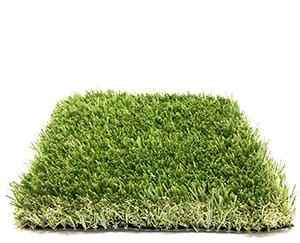
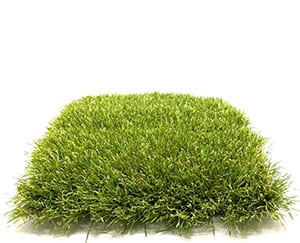
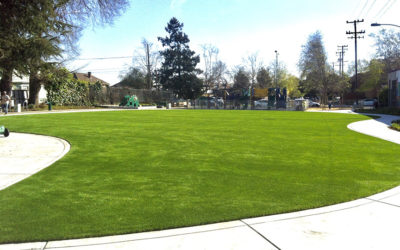
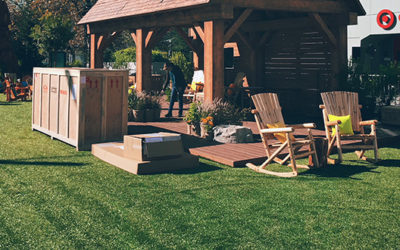
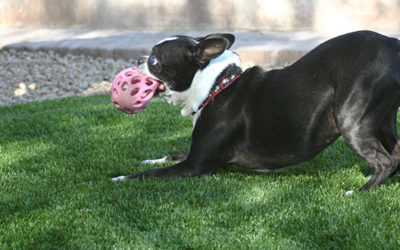
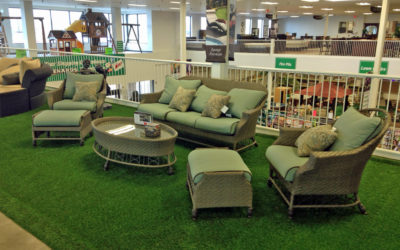
The artificial grass solution when water conservation and being environmentally and eco-friendly are as important as having more green lawn to enjoy year-round.

In War on Childhood Obesity, NewGrass Is One Powerful Weapon

May 15, 2012

It’s not news that childhood obesity is an increasing concern in America or that one undeniable part of a comprehensive strategy against child obesity is to get our kids outside and moving more than they do today

Let’s Move!, the comprehensive government initiative launched by First Lady Michelle Obama, says children need 60 minutes of play with moderate to vigorous activity every day to grow up to a healthy weight. On the other hand, children between eight 18 years old spend an average of 7.5 hours a day on entertainment like the TV, computers, video games, cell phones and movies.

In response, communities nationwide are searching for ways to build new play areas that are not only safe and inviting, but are also environmentally friendly, water-wise and easy to maintain. There’s even a non-profit organization solely dedicated to “saving play for America’s children.” Since its founding in 1996, KaBOOM! has mapped over 85,000 places to play in the United States, built more than 2,000 playgrounds and successfully advocated for play policies in hundreds of cities.

Synthetic lawns like NewGrass® have proved to be one solution for community organizations, schools, cities and families searching for a way to provide play areas for children that are:

  • Safe for kids of all ages (especially when installed with a cushioned underlining)
  • Free of the dirt, mud and rocks associated with traditional gravel playgrounds
  • Allergen- and weed-free
  • Maintained without pesticides or insecticides
  • Green and available for activity any time of the year
  • Water-wise, requiring no watering the way turf grass does
  • Easy to maintain, with just an occasional cleaning off with a rake, leaf blower or “washing” with the garden hose

Combined with their durability and being “live” year-round, artificial grasses are becoming popular alternatives for many schoolyards, playgrounds and backyards. This is especially true where natural grass simply can’t grow or has been worn down to the dirt through repeated use.

“The year-round use of NewGrass combined with its safety and eco-friendly features are key reasons it has been installed by schools, day care centers and similar facilities nationwide, giving more children access to place where they can get outside and get physically active,” said Greg Goehner, NewGrass president.

One of the biggest challenges to getting children moving is providing safe play areas. More than 500,000 children a year are injured on playground equipment, according to the American Academy of Orthopedic Surgeons. About 150,000 of these injuries are considered serious, with an average of 15 children dying each year in playground accidents.

“Another important statistic,” Goehner said, “is that three-fourths of playground injuries are attributed to falls. So choosing an appropriate surface is the most important playground decision that school officials will make. We believe the same is true when it comes to considering a surface for a play area at home.”

In fact, about one-fourth of all serious playground injuries occur in the backyard, according to the U.S. Consumer Product Safety Commission.

Artificial lawns usually have a backing of rubber latex or similar material. NewGrass® has a primary backing layer of urethane and a secondary backing of polypropylene. It also offers BioCel™ with recycled PET plastic incorporated into the backing systems. PET plastic is recycled from soft drink, water and juice bottles, identified by the #1 code on or near the bottom of the container.

Another playground culprit is the dust and dirt that a typical schoolyard can create, especially if its natural grass has been worn down. A schoolyard with natural turf can also spawn allergens. Allergies have no cure. An obvious option is synthetic grass.

NewGrass®, for example, has fibers that are broadloom-tufted from high-quality polyethylene, which is not considered an allergen.

The Dobson Academy, in Chandler, Ariz., chose NewGrass® for several of its common and recreation areas for all of these reasons, officials said. They felt that the synthetic grass option was simply more practical, particularly in the dry desert climate and topography that was very unfriendly to natural grass.

The Arizona State University Children’s Campus Center, in Tempe, had NewGrass® installed for similar reasons: the safety and health of the children they care for every day.

NewGrass® is also the waterless grass of choice of many designers and installers of backyard play areas. Key reasons are that it is lead-safe, provides safety under play sets, and is superior to traditional natural products – include grass, sand and wood chips – as as a ground cover under playground equipment.


Warm, Dry Winter Makes Idea of Grass-Removal Rebates Even More Practical

March 26, 2012

Spring is usually a time of hope and anticipation for homeowners who are looking forward to enjoying their lush lawns and outdoor landscaping in the months ahead. But this year, spring is likely to be rife with ever-tighter water restrictions, greater outbreaks of weeds and more lawn pests than ever. It’s all the result of one of the warmest winters in recorded history and continued draught conditions in many parts of the country.

For the average homeowner, it all combines to make the idea of replacing natural sod lawn with artificial grass more appealing than ever. And many water districts are continuing to offer homeowners rebates and conservation incentives to do just that. NewGrass synthetic grass qualifies for many of these rebates and incentives.

On average, the 2011-2012 winter was the fourth warmest in the United States for the past 117 winters, according to the National Oceanic and Atmospheric Administration. At the same time, much of the country received less-than-average precipitation. For many areas, this meant less snowpack than usual, which will have “consequences for spring and summer water supplies,” according to the National Draught Mitigation Center.

At least moderate to extreme drought conditions are being felt in most of California, Utah, Arizona, New Mexico, Texas, Colorado, Oklahoma, along the Gulf Coast, Florida, Georgia, South Carolina, North Carolina, West Virginia, eastern New York, Illinois, Iowa, North Dakota and South Dakota, and parts of Washington.

According to a roundup of winter weather statistics by weather.com, California had the second-driest winter on record and by late February, 72 percent of the state was in “moderate” drought. California had been drought-free at the beginning of the winter. In fact, snowpack was less than half of the seasonal average in portions of California, Nevada and Arizona, the meteorological website reported.

In addition cash rebates for replacing sod grass with fake grass, conservation incentives also are available for installing synthetic lawn as the initial landscaping for a home or business property. The list of cities and water districts that offer rebates is constantly changing. The best thing to do is call your local water utility company and ask about their rebate program.
To get an idea of what’s out there, you can visit the Association of Artificial & Synthetic Grass Installers Web site to get more information about many cities and districts that currently offer rebates.

However, here is information on some of the more established or ongoing programs.

The Southern California SoCal Water$mart program is one of the country’s most aggressive in offering rebates for synthetic grass installation — and with good reason.

“Turf grass is one of the most water-intensive plants in your landscape,” the agency’s website says. “Its high water and frequent maintenance needs make it a time-consuming, expensive option … Up to 70% of California’s entire residential water supply is applied to home landscapes.”

The SoCal Water$mart 2011-2012 program is now available. This program will run until April 30, 2012. If you live an city or water district that participates in the SoCal Water$smart program, you can receive $1 or more for every square foot turf that you remove.

Member agencies of the SoCal Water$mart program that offer turf-removal rebates include:


Los Angeles (County) Waterworks District offers a rebate of 30 cents per square foot for installing up to 500 square feet of artificial grass. You can download a PDF for more information.

The Municipal Water District of Orange County (Calif.) has a turf removal program that it operates in partnership with the Metropolitan Water District of Southern California and local retail water providers. Residential and small commercial customers of participating retail water providers are eligible to receive an incentive of $1 per square foot of turf removed for qualifying projects. More information is at the agency’s website.

In Arizona, several cities and water districts offer turf-removal incentives for residential customers:

  • Peoria: up to $550
  • Tempe: up to $500
  • Mesa: $50-$225
  • Scottsdale: up to $1,500 (up to $3,000 commercial)
  • Glendale: up to $750


For complete information, visit the website of the Arizona Municipal Water Users Association.

In Nevada, the Southern Nevada Water Authority will rebate customers $1.50 per square foot of grass that they remove and replace with desert landscaping or artificial lawn, such as NewGrass. The maximum $1.50 rebate is for up to 5,000 square feet of sod grass converted per property, per year. Beyond the first 5,000 feet, the authority will provide a rebate of $1 per square foot. For details, visit the SNWA website.

NewGrass® is proud to be an ally in the EPA’s GreensScape Program and the only artificial lawn that is Certified 100% Eco-Friendly, from the way it is manufactured to the company’s pledge to properly recycle any NewGrass® lawn at the end of its usable life, at no cost to the customer.


    Syndicate


© NewGrass LLC All Rights Reserved